Business Insurance
Duty to Defend: Who Actually Picks Your Lawyer When a Claim Hits.
Brokers hear some version of this question constantly. A claim lands on a client’s desk, may be an EPL suit or a D&O demand, and there’s real relief because this is exactly why they bought the insurance. Then they learn their carrier gets to pick the lawyer who defends them, and it’s rarely the firm they already trust.
That surprises almost every client we work with, and it’s one of the most overlooked pieces of financial lines coverage.
How Duty to Defend Actually Works.
Many management and professional liability policies, including D&O, EPL and E&O, are written as duty to defend policies. Not only does the insurer pay for the defense, they run it. They pick the law firm and set the strategy, so even though a client’s name is on the lawsuit, they don’t have final say over who represents them.
We understand why insurers want that control. Defense counsel on these lines can bill $2,500 an hour or more. If that gets a case dismissed quickly, it’s money well spent. If a client is still paying that rate a year later, it’s easy to see why the carrier gets nervous too. Legal spend is one of the biggest costs insurers manage, and controlling the defense is how they do it.
Most clients never think about this at binding. They’re focused on limits and premium, not on who gets to choose their lawyer if things go wrong. By the time a claim hits and the question actually matters, there’s no time left to negotiate from strength.
Claims Advocacy for the Claim You Haven’t Had Yet.
This is the point Relation Insurance tries to make with its clients, and it’s probably the biggest shift we’d ask a risk manager or CFO to make in how they think about claims advocacy. It doesn’t start when a claim starts. If you’re only calling your advocate after you’ve been sued, you’re already behind.
When we take on a new client, one of the first things we often ask for is their existing policies. We can then go through them line by line and build a checklist of priorities, ranked high, medium and low. When we do, we’re looking for the specific spots where an insurer is likely to push back on a future claim, and choice of counsel is almost always on that list.
In shifting focus to choice of counsel, we can then go back to the carrier before there’s ever a claim and ask them to put a client’s preferred defense firm on the policy as a negotiated term, not something we hope for later.
It doesn’t always work, but getting it negotiated ahead of time beats trying to win it in the middle of a crisis, which is what happens when nobody raises the question until the lawsuit is already filed.
Relationships Do the Real Work.
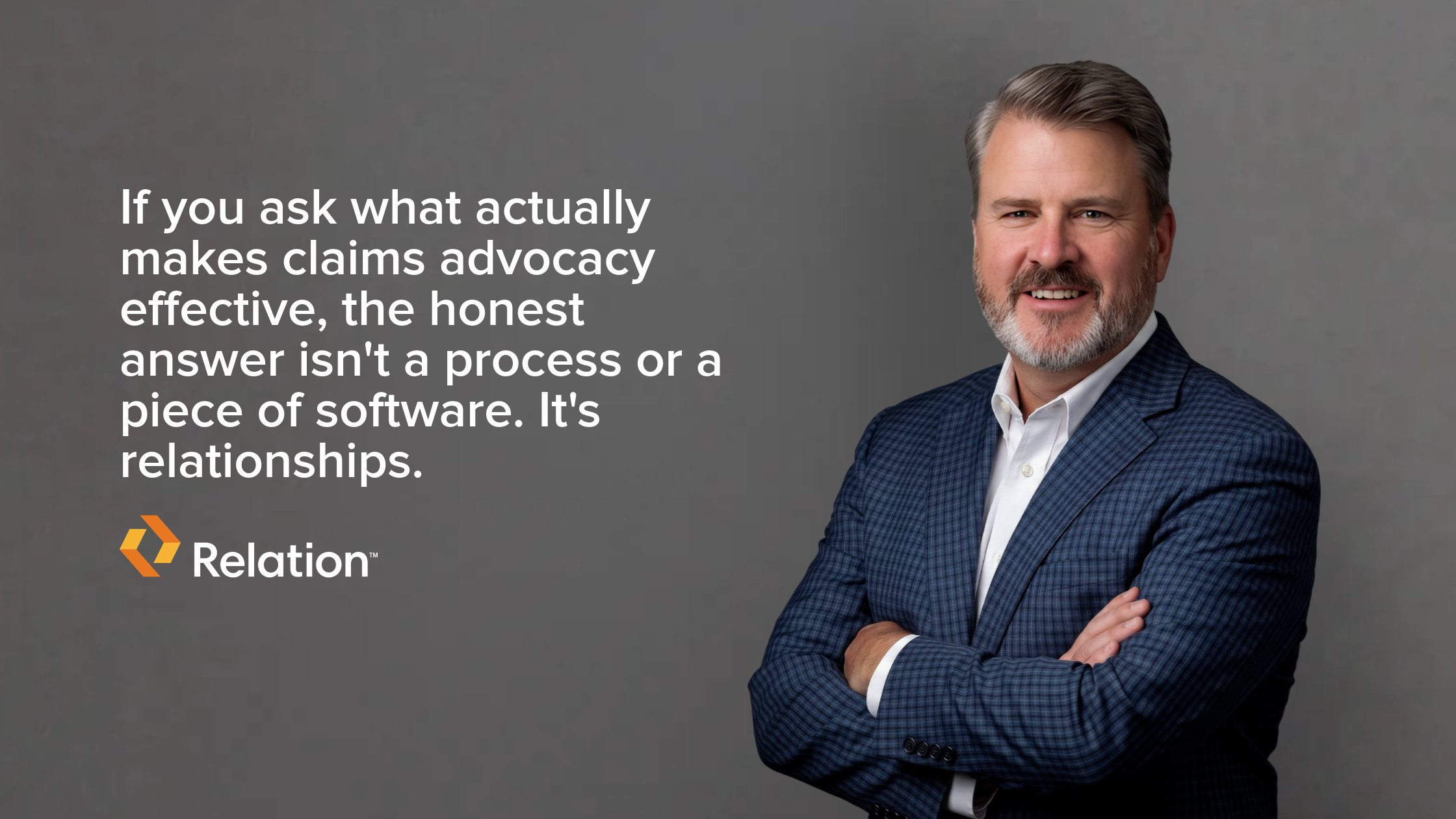
If you ask what actually makes claims advocacy effective, the honest answer isn’t a process or a piece of software. It’s relationships.
I started my career at AIG on the insurance company side, and several people on our claims team have that same background: years in claims adjuster and claims leadership roles before ever working for a broker. Between those relationships across the team, people we’ve known for years and colleagues who’ve built their own networks at other carriers, we can bring underwriting and business leadership into a conversation that would otherwise stall on paper. This approach can result in a client getting more than the contract terms technically owed them.
That’s the honest version of claims advocacy. We don’t win every argument. We just don’t stop at the first no, and that has led to our clients obtaining results they weren’t strictly entitled to, because someone on the other side of the table knows us and picks up the phone.
A Case That Still Sticks With Me.
One case from earlier in my career shows what I mean about getting into the details early. A client faced a discrimination claim from a former employee who said she’d been passed over for promotions and higher earning accounts. The insurer agreed the wage disparity portion was covered but argued the lost commission opportunity wasn’t, which was the larger part of the claim by far.
I didn’t accept that framing. We researched the relevant law and found support that wages under the policy included commissions, then made that argument directly to the carrier. The claim was paid in full, $200,000 for pay disparity and $600,000 for lost commissions, and it settled within 30 days.
That case predates my time at Relation, and it wasn’t a duty to defend dispute specifically, but it’s the same habit I bring here: know the policy, potentially even better than the person across the table, and don’t take their first answer as the final one.
The Same Fight Is Spreading to Cyber.
This isn’t limited to D&O and EPL anymore either. Cyber insurers are starting to build their own panels of approved breach counsel, so the same question of who gets to choose your lawyer is showing up in cyber claims too. If your broker isn’t thinking about that yet, they will be soon.
One Question Worth Asking Now.
You don’t need to become a coverage lawyer to protect yourself here. You need to ask your broker one question before you ever have a claim: does my policy let the insurer assign my defense counsel, and has anyone tried to negotiate my preferred firm onto it in advance?
If your broker doesn’t have a ready answer, that’s worth a real conversation. Claims advocacy shouldn’t only show up after something’s gone wrong. At Relation, we’re available all year round, claim or no claim, because the best time to deal with a duty to defend problem is before you ever need to.